
 One of the most rewarding jobs I’ve had was professor of communication. I taught a class called Fundamentals of Communication, a required course and one of my favourites when I was a student. Years later, it was my favourite class to teach. It had a nickname we tried to keep from new students. Each semester, a new group of students would come into the classroom, with no idea of what they were going to learn. I always opened with, “Welcome to Fundamentals of Communication. This course has another name. It’s called (Insert dramatic pause) The Speech Class.”
(Queue student faces turning green)
Most people are terrified of public speaking but luckily, I am a great teacher. Those green faces would soon return to their regularly scheduled colour and by the end of the semester, they’d become comfortable public speakers. Over the next few posts, I’m going to teach you some of the tricks, tips, and steps to turn yourself into an effective public speaker.
 What Type of Speech Works Best?
Before jumping in, you need to know what your goal is with the speech. Are you sharing information, selling an idea or product, or trying to motivate the audience. Knowing the type of speech you’ll be giving helps you research and write the content. To be an effective public speaker, you need to focus on what you hope to accomplish and understand who your audience is so you can select the appropriate tone. There are three main types of speeches: Informative, Persuasive, and Special Occasion Speeches.
Informative Speeches
Informative speeches educate the audience using facts, data, and statistics. They focus on explaining a topic clearly and without bias so the audience can form their own opinion. Informative speeches include:
 Demonstrative Speech
Demonstrative speeches show an audience how something works or how to do something. They typically use visual aids and focus on practical demonstration rather than explanation alone.
Explanatory Speech
Explanatory speeches clarify or explain a concept, process, or issue to the audience in a clear and understandable manner. It explains how something is done through detailed, step-by-step explanations. Unlike demonstrative speeches, they do not rely on visual aids.
Motivational Speech
Motivational speeches inspire audiences to improve themselves or achieve goals. They focus on encouragement, confidence-building, and emotional uplift.
 Persuasive Speeches
The purpose of a persuasive speech is to change someone’s mind or bring them to a specific way of thinking. Types of Persuasive Speeches include –
Pitch Speech
Pitch speeches seek approval or support for an idea, product, or solution. They emphasize benefits and value, often within professional or business settings. Sales people use pitch speeches to convince potentials clients that their product is desirable and necessary in order to get people to buy something.
 Debate Speech
Debate speeches follow structured rules and time limits, with opposing sides presenting arguments. Their purpose is to justify a position rather than recruit agreement, while developing research and critical thinking skills.
Special Occasion Speeches
Special occasion speeches are tailored to specific events such as weddings, awards, or introductions. They are usually brief, engaging, and focused on the context rather than data or analysis.
 Ceremonial/Commencement Speech
These types of speeches celebrate or honor people and often include reflection and inspiration. The most common speech of this type is a graduation speech like the one given by the valedictorian or salutatorian.
Entertaining Speech
Entertaining speeches are designed to amuse and emotionally engage the audience. They are usually informal, brief, and rely on humor or storytelling rather than factual information. The host of award shows use entertaining speeches to keep the audience engaged while the next award is set up.
 Oratorical Speech
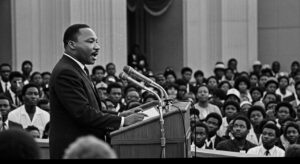
Oratorical speeches are generally formal and often delivered at ceremonial events. They may express opinions or address issues but are not primarily focused on persuasion. Classic examples of oratorical speeches are Martin Luther King’s “I have a dream,” John F. Kennedy’s Inaugural Address that includes the line “Ask not what your country can do for you but what you can do for your country,” and Winston Churchill’s “We Shall Fight on the Beaches.”
 Impromptu Speech
Impromptu speeches are delivered without preparation when someone is unexpectedly asked to say a few words. Although often stressful, experience helps speakers deliver an impromptu speech more confidently.
Farewell Speech
Farewell speeches mark departures and express gratitude, reflection, and goodbyes. They often carry emotional weight for both the speaker and the audience. A retirement speech given by a person’s boss is a great example of a farewell speech
 Eulogy or Funeral Speech
Eulogy speeches honor someone who has passed away by reflecting on their life, character, and achievements. They are typically heartfelt and delivered by someone close to the deceased.
Tips for Speech Research
In closing, I have a few pieces of advice I give my students.
 Do your research!
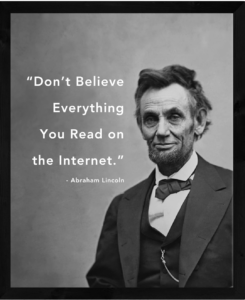
Research your topic thoroughly and make sure the information you’re providing is accurate. I recommend having three sources for each fact. Be very careful using Wikipedia! It is usually spot on, but anyone can create a Wikipedia account and change the information on a page to whatever they want. The bogus information can be up for awhile before it is corrected. This is why extra sources are
important.
Research your audience. Who is coming to hear your speech? What is their background, interests, and expectations? How old are they, what is their educational background? All of this helps shape effective content and prepares the speaker to answer questions.
Focus on Your Topic
Strong speeches rely on clear understanding of the subject and staying focused. Creating an outline helps avoid unnecessary information. Make sure your words flow smoothly from idea to idea, from point to point. To understand why flow is important, check out my post “Why flow matters.”
 Practice Your Speech
What is your time limit for the speech? Practice giving the speech out loud and time it so you know if you need to speed up or slow down. Most people tend to talk too fast when giving a speech because they’re nervous. Your audience won’t be able to understand you if you’re speaking at lightspeed and understanding is kind of the point.
Say your speech in front of a mirror. Sounds silly but it helps. Practice with index cards or a written version of your speech if you intend to use them during the presentation. Don’t be looking at the cards the entire time, you need to look at the audience. If you’re not paying attention to them, why should they pay attention to you? This is why practicing with your cards or paper is important.
 Record yourself giving the speech to make sure you’re happy with the pacing. I also recommend practicing in front of family or friends to help decrease your nervousness about speaking in front of people. You’ll have some experience and won’t feel like you’re going in cold turkey.
If you’re reading from cards or paper, make sure the speech is in a large, easy to read size font. I find 16 – 18 pt is good. If you’re looking at the audience, it will help reorient you when you look back down at the words.
Know the Venue
Where will you be giving this speech? Will you have the audio/visual equipment you need to ensure you’re heard? This can influence tone, length, and your delivery style. Get to the venue early so you can practice with the microphone or presentation software. It is embarrassing to have spent nights creating your presentation only to arrive and find out they don’t have the right equipment to connect your laptop or thumb drive.
 My Favourite Piece of Advice if You’re Nervous
No, it isn’t to imagine everyone naked. That would most likely be distracting. It is this: no one in the audience would willingly switch places with you.
Everyone is nervous giving a speech. They’re looking at you and thinking, “wow, that person is brave. I wouldn’t want to be up there.” But you’re going to be fine! You’ve written a good speech and know your subject, you have practiced, and there is no one in the audience who wants to be up there.
You’ve got this!